Easements and Neighbor Law on the Vaud Riviera: What Your Purchase Agreement Does Not Always Make Clear
On the Vaud Riviera, sloped parcels, shared service roads, and old manor houses often conceal right-of-way easements and neighbor law rights that do not always stand out clearly in the purchase agreement. Here is what you need to understand before signing.

- What a right-of-way easement actually is and how it is recorded in the Vaud Land Registry
- Why older purchase agreements can obscure poorly worded or forgotten neighbor law rights
- Typical situations found on the Vaud Riviera: overhanging terraces, vineyard paths, lake access
- How to verify and secure your purchase before signing with the notary
- What you can do if a disputed easement disrupts your enjoyment of the property
The Vaud Riviera is a territory unlike any other: gently or steeply sloping hillsides, parcels subdivided over generations, century-old vineyard paths running alongside private properties, manor houses whose terraces overhang neighboring parcels. This enchanting landscape conceals a complex legal reality that neither the price per square foot nor the lake view reflects. Before buying in Vevey, Montreux, Chardonne, or Saint-Saphorin, it is essential to understand what right-of-way easements and neighbor law rights actually entail.
These limited real property rights, whether or not recorded in the Vaud Land Registry, can restrict your construction projects, require you to allow a neighbor or agricultural operator to pass through your property, or even expose you to costly litigation. Yet they are sometimes mentioned in just a few cryptic lines in the purchase agreement, or worse, passed over in silence entirely because no one has enforced them in twenty years.
What is a right-of-way easement, in practical terms?
Under Swiss law, a predial easement is a limited real right that encumbers a servient tenement for the benefit of a dominant tenement. This mechanism is governed by the Civil Code from Article 730 onward. The right-of-way easement is the most common: it gives the owner of the dominant tenement the right to cross the neighboring property to reach their own. It may be pedestrian, vehicular, or reserved for certain agricultural uses. What matters is that it is attached to the land rather than to the person of the owner: if it is recorded in favor of a parcel, it remains valid even after a sale, and the new owner continues to benefit from it without it being extinguished through successive transfers.
From a legal standpoint, a conventional easement must be established by a notarial deed executed before a notary and then recorded in the Land Registry to be enforceable against third parties. In theory, any diligent buyer can therefore discover it by consulting a registry extract. In practice, things are less straightforward: some right-of-way easements are recorded with old-fashioned language drafted in vague terms whose exact scope is not immediately apparent. Other usages rest on simple private agreements between neighbors that were never formally recorded, creating a legal gray area.
There are also statutory restrictions arising directly from the Civil Code. The right of necessary passage is the best-known example: under Article 694 of the Civil Code, an owner who has only insufficient access to a public road may require neighboring owners to grant the necessary passage, subject to full compensation. The Federal Supreme Court sets very strict conditions, however, because this amounts to a form of private expropriation: genuine necessity must exist, and the owner must first have exhausted public-law remedies to obtain access. This right can arise years after a sale, as an unwelcome surprise for the owner of the servient tenement.
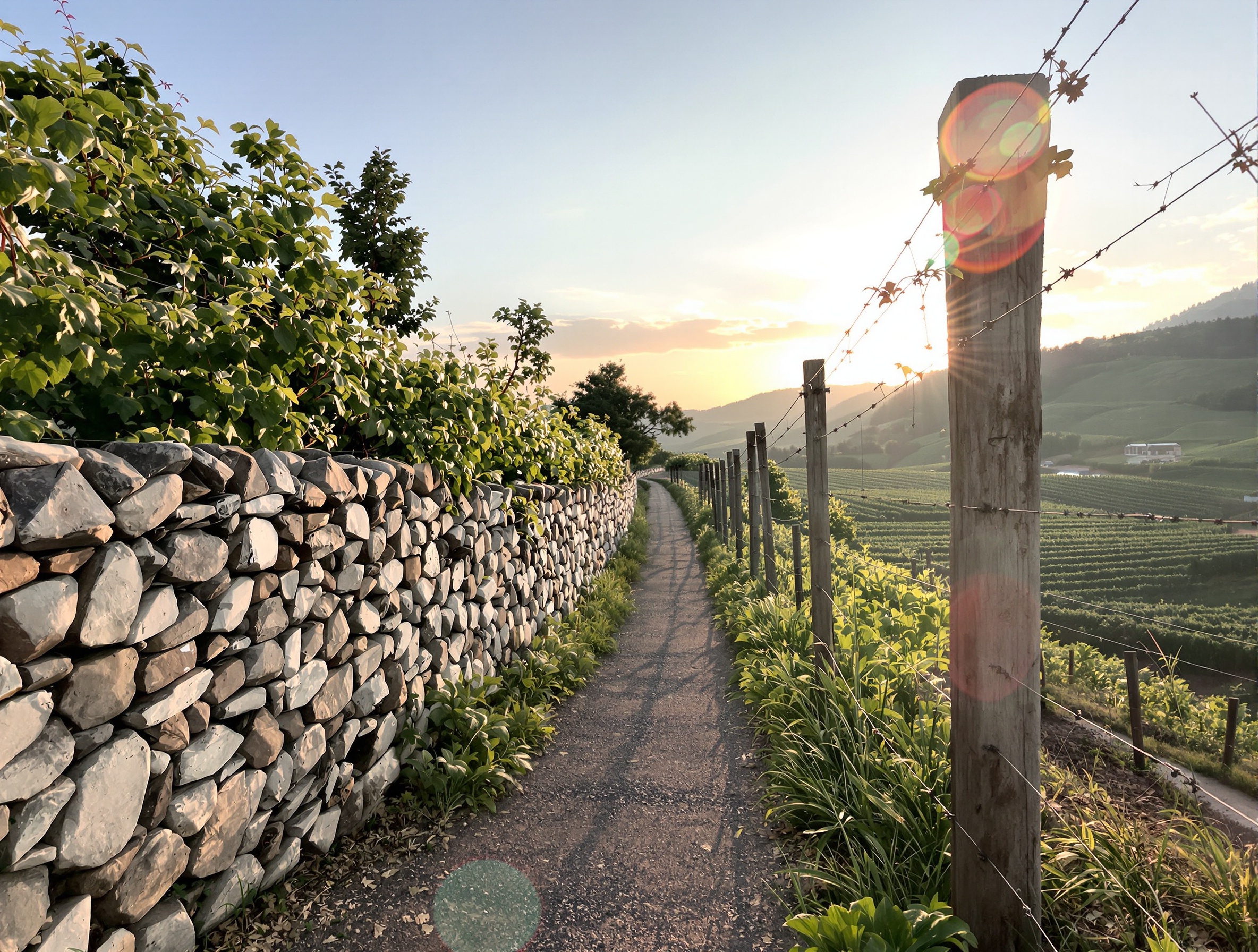
The Vaud Riviera: fertile ground for neighbor disputes
The geography of the Vaud Riviera creates configurations that multiply high-risk situations. The slopes of Lavaux and the vineyards above Vevey and Montreux have produced a fragmented parcel structure, often passed down through inheritance or sold in multiple lots over decades. A vineyard path that was once used solely for wine-growing operations may today be the only access to a villa built on the upper parcel. If that path crosses the lower property, the right-of-way easement is implicitly used by everyone, yet its exact scope, its width, and the maintenance rights and obligations it entails are rarely spelled out in recent deeds.
The shores of Lake Geneva raise similar questions. Lake access, private docks, and shoreline paths are often governed by an entanglement of public rights, private easements, and cantonal concessions. A buyer who believes they are acquiring exclusive lake access may discover that a public right-of-way easement, or an easement in favor of a neighbor, significantly limits their enjoyment.
The region's old manor houses, with their outbuildings, storage rooms, and party walls, also conceal numerous implicit neighbor law rights: rights of support, rights of light and view, unobserved legal setback distances, roof or cornice encroachments. In the historic centers of Vevey or Montreux, it is not uncommon for adjoining buildings to share drainage pipes or cellar access that no recent deed mentions.
What the purchase agreement does not always say
The notarial purchase agreement is supposed to reproduce the information from the Land Registry. But there are several reasons why important rights may not appear clearly. First, the notary executing the deed transcribes the recorded easements but is not required to comment on them or specifically draw the buyer's attention to their practical implications. A vehicular right-of-way easement in favor of the neighboring parcel may appear in an annex, in a summary table running several pages, without anyone fully grasping the concrete consequences for a future extension or fencing project.
In addition, easements established long ago can be difficult to locate or interpret. Their original wording was sometimes very general, and the parties relied on a verbal agreement about practical arrangements. To determine the content of such an easement, the law provides for reference first to the registration entry, then, if that is unclear, to the constitutive deed, and finally to the manner in which the right has been exercised peacefully and in good faith. It is often only when a dispute arises, sometimes after a sale, that the vagueness of the original drafting becomes a problem.
There are also the private-law rules governing neighbor relations, particularly those relating to setback distances for plantings, views onto neighboring properties, water drainage, and excessive nuisances. These rules apply independently of any deed. They appear in no sale document because they exist by operation of law. Yet many neighbor disputes originate from them, especially when a new owner undertakes alterations.
How to secure your purchase before signing
The first and indispensable step is to request a complete extract from the Vaud Land Registry for the parcel in question. This extract lists all recorded easements, whether they benefit or encumber the parcel. It should be read carefully or analyzed by a professional. For the Vaud Riviera, the competent office is the Land Registry of Eastern Vaud, located in Vevey, which covers the districts of the Riviera, Aigle, and Lavaux-Oron, among others.
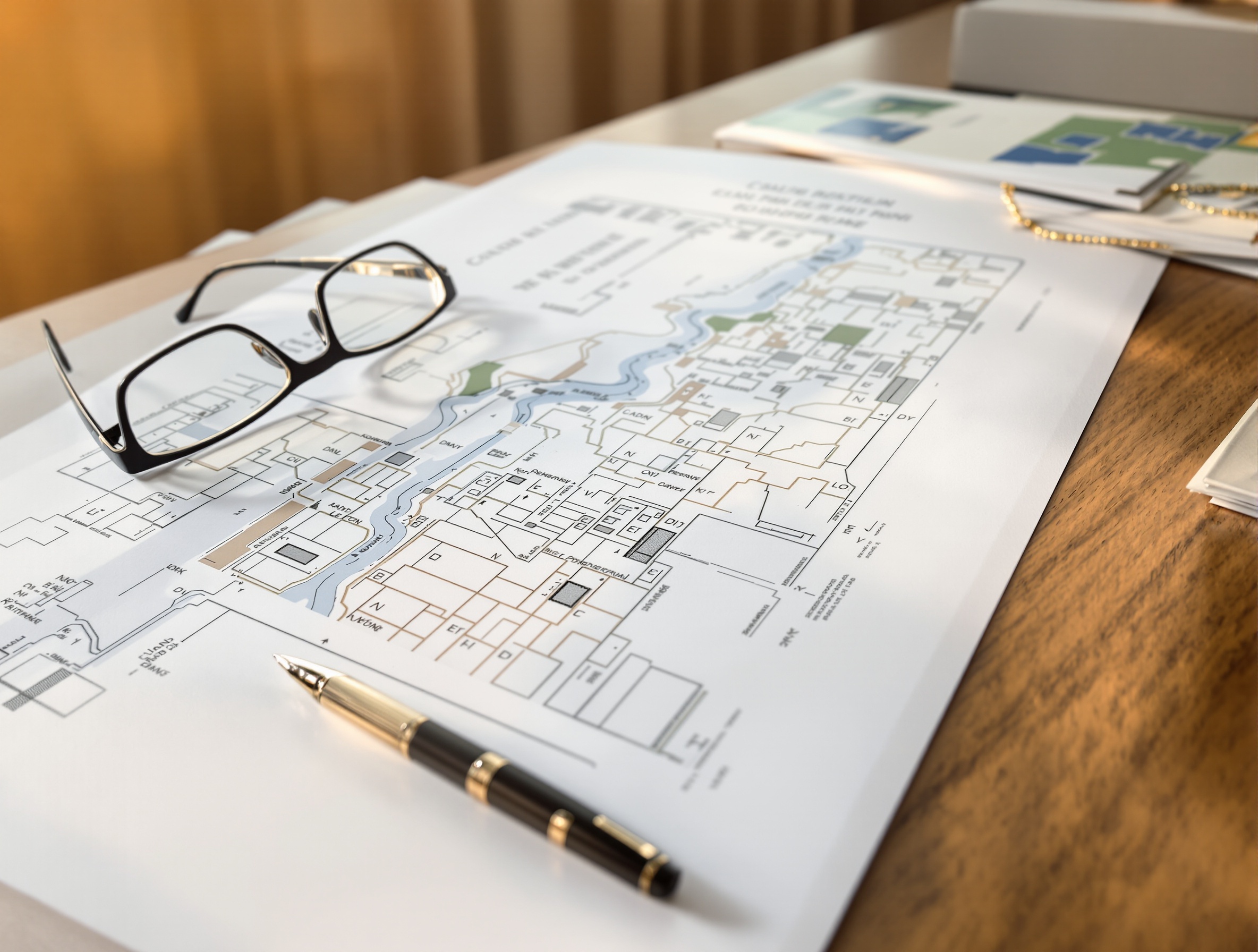
It is also useful to consult the cadastral plan, available from the Vaud cantonal cadastre, to visualize the footprints and alignments of registered easements. By comparing the cadastral plan with the on-the-ground reality during your visit, you can identify paths that are actually used whose legal status still needs to be verified. Do not hesitate to speak directly with neighbors: a straightforward conversation often reveals informal usages that could become points of friction.
Have the original title deed and, where possible, the constitutive deeds of the easements themselves reviewed as well. These documents, which are sometimes quite old, specify the exact scope of the right, the conditions of exercise, and the maintenance obligations. If you have a construction or renovation project, have these elements analyzed by an architect and a legal professional before submitting a permit application: an easement that was not anticipated can block or delay a project at considerable cost.
What to do if an easement disrupts your enjoyment of the property
If you are already an owner and an easement or neighbor law right is causing conflict, the first step is always amicable negotiation. In the vast majority of cases, an agreement between neighbors is sufficient to resolve the dispute: clarifying the hours of passage, redefining the route of a path, sharing the maintenance costs of a common access. On the Vaud Riviera, as elsewhere in the canton of Vaud, neighbor relationships are built over the long term, and judicial proceedings are costly for all parties in terms of time, money, and peace of mind.
If negotiation fails, a conciliation procedure is generally a mandatory prerequisite before bringing the matter before the civil court, and mediation may also be considered. As a last resort, the civil courts of the canton of Vaud have jurisdiction to adjudicate disputes involving easements and neighbor law rights. The timelines and costs of court proceedings, however, strongly favor resolving the issue in advance, ideally before the acquisition.
It is also possible, with the agreement of the owner of the dominant tenement, to modify or extinguish an easement by notarial deed and an amending entry in the Land Registry. If a right-of-way easement has lost all utility for the dominant tenement, the encumbered owner may, in the absence of agreement, apply to the court for its cancellation; it should be noted, however, that prolonged non-use alone is generally not sufficient, as it constitutes only an indication of lost utility. These steps take time, but they allow the legal situation of a property to be durably clarified, which facilitates a future resale.
The role of professional advice: do not improvise
In a real estate market as competitive as the Vaud Riviera, the pressure to close quickly is real. Well-located properties move fast, and buyers are tempted to minimize legal due diligence in order not to miss an opportunity. This is often a mistake. A villa in Chardonne with a lake view may seem perfect until you discover that a vineyard operator holds a vehicular right-of-way over part of the garden during the harvest season, a right that nobody had thought to mention clearly.
An experienced real estate agent who knows the Vaud Riviera well can alert clients to high-risk configurations: landlocked parcels, shared service roads, old adjoining buildings, lake access points. The agent does not substitute for the notary or legal counsel, but contributes to asking the right questions at the right time, before the preliminary sale agreement is signed.
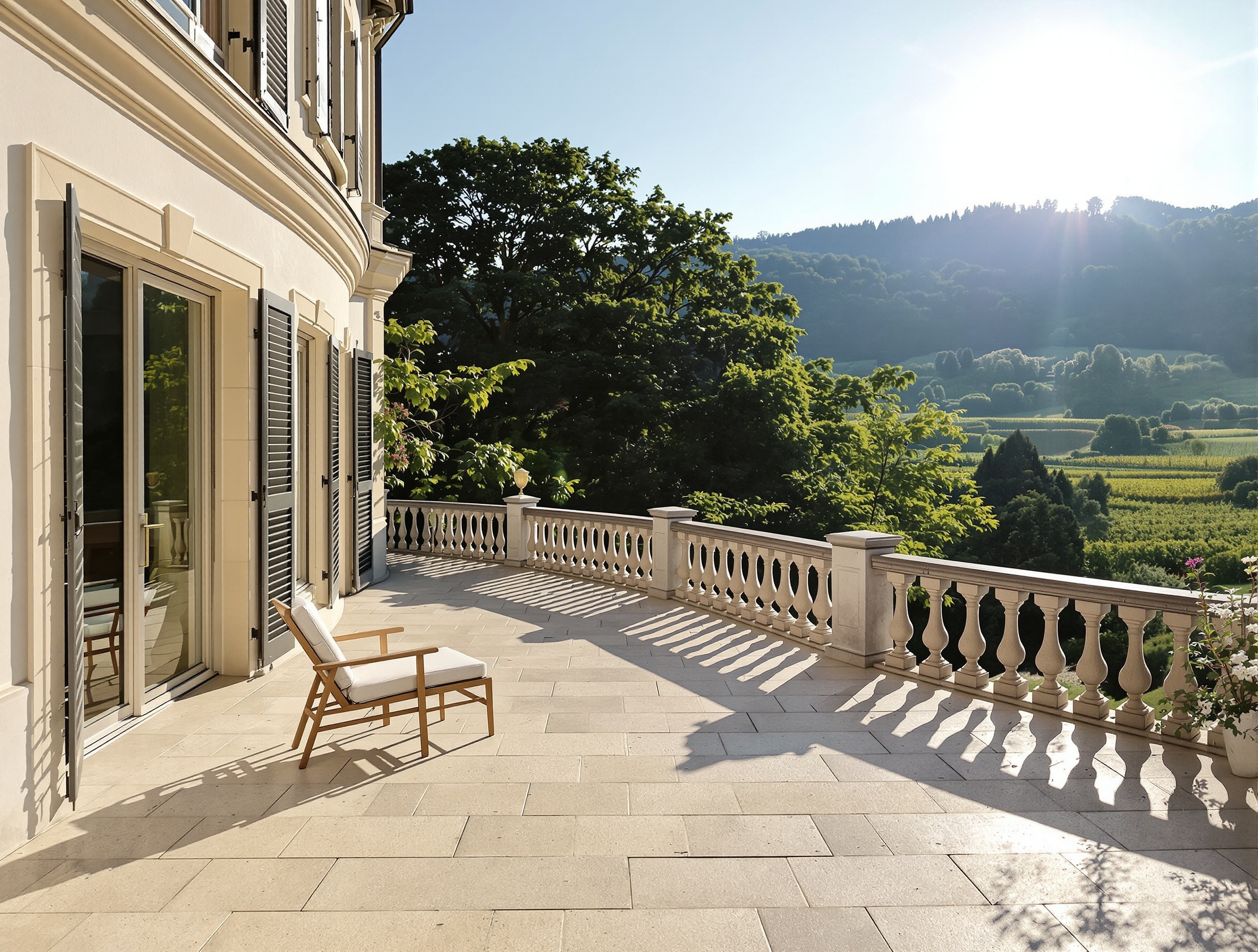
Key takeaways before any purchase on the Vaud Riviera
Easement and neighbor law is not reserved for legal professionals. Every owner or prospective buyer on the Vaud Riviera stands to benefit from understanding the broad outlines of what their purchase agreement contains and what it does not always contain. Careful reading of the Land Registry extract, a thorough site visit, an open conversation with neighbors, and professional advice before signing can prevent years of conflict.
The beauty of the Vaud Riviera's landscapes, the quality of life it offers, and the strength of real estate values in this area make it a prime buying destination. But that quality comes with a dense historical and legal fabric, shaped by centuries of coexistence among wine growers, lakeside property owners, municipalities, and private individuals. Taking the time to understand it means buying with peace of mind and protecting your investment for the long term.
Get a free valuation of your property or talk it through with our team, in Lausanne and on the Vaud Riviera. No obligation.

Real estate received as a gift and then resold on the Vaud Riviera: how the reference value is calculated for the capital gains tax

Buying a Tenant-Occupied Property: What Buyers Don't Always Realize Before Signing

Belle Époque Architecture on the Vaud Riviera: Living in a Listed Building, Between Charm and Hidden Constraints