Vacancy Rates in Lausanne and the Vaud Riviera: What the Official Figures Really Hide from Investors
Official statistics on vacant housing are often misunderstood, or even misleading for real estate investors. A closer look at the real figures for Lausanne and the Vaud Riviera, and what they concretely mean for your investment strategy.

- How the vacancy rate is actually calculated and why the measurement method often distorts how the market is read
- The structural differences between Lausanne and the municipalities of the Vaud Riviera (Vevey, Montreux, La Tour-de-Peilz)
- Why a low vacancy rate does not automatically guarantee good rental returns
- The property segments where vacancy remains high despite an overall tight market
- How to interpret this data to refine your investment decision
Every year, cantonal statistics publish a vacancy rate for municipalities in the canton of Vaud. A single number, reassuring or alarming depending on the case. Investors, property owners, and real estate professionals seize on it as a verdict. Yet behind this percentage lies a far more nuanced reality, shaped by timing gaps, invisible market segments, and hyper-local dynamics that aggregated figures never truly capture.
In a market as distinctive as the canton of Vaud, spanning the urban density of Lausanne and the residential and tourist profile of the Vaud Riviera, understanding what vacancy statistics are really saying is a key skill for any serious investor. Here is what the official figures will never tell you on their own.
What the Official Vacancy Rate Actually Measures
The residential vacancy rate in Switzerland is published each year by cantonal statistical offices and the Federal Statistical Office (FSO). It is recorded as of June 1 and covers only habitable dwellings that are unoccupied on that date and are actually available for long-term rental or for sale. In the canton of Vaud, the survey is conducted by Statistique Vaud through the municipalities, which themselves record properties declared vacant. The rate is then calculated by dividing that number by the total housing stock from the previous year.
The first point to keep in mind: this snapshot taken on June 1 reflects only a single moment in time. An apartment vacated in July, relisted in August, and re-rented in September never appears in the statistics, even if it experienced several weeks of actual vacancy. In a market as fluid as Lausanne's, where rental turnover is intense, a portion of real vacancy is simply not captured by official statistics.
A second important limitation: only properties available for rental or sale are counted. An apartment left empty by an owner who is hesitant to put it back on the market, a property under renovation, or one tied up in an estate settlement appears nowhere. These situations, which are quite common in the older neighborhoods of Lausanne or in certain municipalities along the Vaud Riviera, represent a form of de facto vacancy that is completely invisible.
A third nuance, often decisive: the official rate combines rental housing and owner-occupied housing. Yet industry professionals estimate that vacancy in the rental market alone is significantly higher. In the canton of Vaud, USPI Vaud, which has been conducting its own survey among property management firms since 2021, recorded a rental market vacancy rate of approximately 1.44% as of June 1, 2024, compared to an official cantonal rate of around 0.96%. The gap illustrates just how much the measurement method influences how the market is read.
Lausanne: Surface Tension Masking Neighborhood Disparities

Lausanne has posted one of the lowest vacancy rates in the canton for several years, hovering around 0.6% for the district. Rental demand there is structurally strong, driven by the presence of major universities (EPFL, UNIL, HEC), international organizations, and a young, mobile population. On paper, investing in Lausanne therefore seems like an obvious choice: few vacant units, strong demand, and solid rents.
But the micro-local reality is far more contrasted. In sought-after central neighborhoods such as La Cité, Sous-Gare, or Chailly, the pressure is real and vacancy is virtually nonexistent for well-maintained properties. In contrast, certain areas on the outskirts of the agglomeration may record noticeably higher rental vacancy for properties built in the 1970s and 1980s that are energy-intensive and poorly suited to current tenant expectations.
This observation illustrates a fundamental truth about the Lausanne market: vacancy is not uniform, it is qualitative. A property that is obsolete from an energy standpoint or uncomfortable in its layout can remain vacant for several weeks in an overall tight market. For the investor, this means that the average municipal vacancy rate says nothing about what awaits a specific apartment if it is not aligned with market expectations.
The Vaud Riviera: A Dual Market That Statistics Struggle to Capture
From Vevey to Montreux, through La Tour-de-Peilz and Chardonne, the Vaud Riviera presents a market structure that is radically different from Lausanne's. The residential fabric there blends primary residences, secondary homes, seasonal rentals, and properties held by foreign owners. This overlap of statuses considerably complicates the reading of the vacancy rate.
On the Riviera, a significant portion of the housing stock is not intended for long-term rental. Upscale villas and apartments sit empty for much of the year without ever being offered for rent. These properties do not enter the vacancy statistics, yet their existence influences price dynamics and perceived availability. An investor comparing vacancy rates in Montreux with those in Lausanne is actually comparing markets whose underlying logic is fundamentally different.
This methodological gap is confirmed in the figures: for the Riviera-Pays-d'Enhaut district, Statistique Vaud recorded a housing vacancy rate of 0.85% as of June 1, 2024, while the USPI Vaud survey of property management firms produced a significantly higher vacancy rate for the rental market alone in the same district. Depending on the scope used, the same market can therefore appear either very tight or relatively relaxed.
Conversely, in the more working-class areas of Vevey or in certain neighborhoods of Montreux located away from the lake, demand for primary rental housing is robust, supported by a regional working population that cannot access homeownership in a very tight purchase market. Here, vacancy remains low and rental returns can be attractive, provided the type of property and tenant segment are well targeted.
The High-End Segment: When Vacancy Becomes Structural
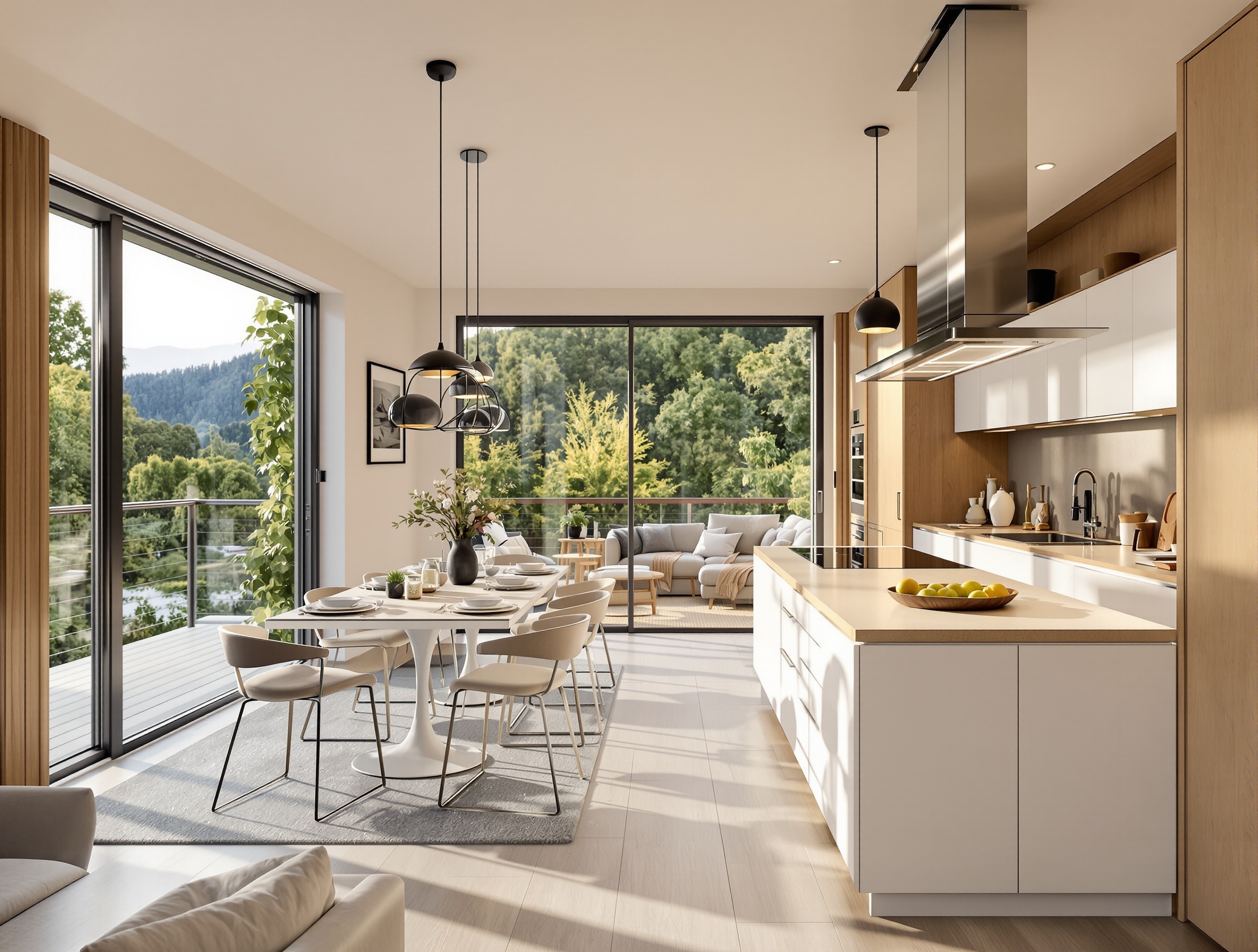
On the Vaud Riviera, and to a lesser extent in Lausanne, there is a phenomenon that aggregate statistics almost entirely conceal: vacancy in the premium segment. Upscale apartments that are newly built or recently renovated, listed at high rents, can remain available for several months due to a lack of financially qualified tenants or because supply locally exceeds effective demand at that price level.
This imbalance has intensified in certain recent development projects on the Riviera, where developers delivered properties designed for a wealthy international clientele in municipalities whose local economic fabric does not naturally generate that type of demand. The result: occupancy rates below projections, longer vacancy periods, and downward pressure on asking rents that directly contradict the optimistic reading that the low aggregate vacancy rate might have suggested.
The Impact of New Construction on Reading the Figures
Another significant bias relates to new housing. When a new building is delivered, apartments that are unoccupied on June 1 appear in the vacancy statistics, even if the leasing process is underway and the units will be occupied a few weeks later. A year with a high volume of new housing deliveries can therefore temporarily push up the vacancy rate in a municipality, creating a false impression of a loosening market.
This dynamic is all the more relevant because housing construction has slowed in the canton in recent years, keeping the market under pressure. An investor who observes a temporary rise in the vacancy rate in a municipality on the outskirts of Lausanne or on the Riviera without understanding the underlying housing delivery dynamics may make the wrong decision, overestimating the fragility of the local rental market.
What Investors Should Be Looking at Instead
For a truly useful reading of the market, investors benefit from cross-referencing the official vacancy rate with other indicators. The average time-to-lease on real estate platforms is particularly telling: it shows the actual time it takes for a property to find a tenant in a given area. The gap between asking rents and rents actually achieved is another strong signal, as is the evolution of purchase prices relative to gross rental yields.
Analyzing the composition of the local rental stock is also essential. A municipality where a large share of the housing stock dates from before 1980 and has not been renovated will exhibit very different vacancy dynamics from one where supply is recent and energy-efficient. On the Vaud Riviera, where the older housing stock is significant in the historic centers of Vevey and Montreux, this qualitative reading is indispensable.
It is also useful to keep the regulatory stakes in mind. In the canton of Vaud, a district is considered to be in a housing shortage when its vacancy rate remains durably below 1.5%, calculated as an average over the three most recent years. This threshold conditions, among other things, the application of rental housing preservation rules and rent controls following renovations, which can have a direct impact on an investor's strategy.

Local Expertise: The Only Answer to the Limits of Statistics
No aggregated statistic, however well constructed, will replace concrete on-the-ground knowledge. The vacancy rate of a municipality conceals street-level, building-level, and market-segment realities that only a locally rooted professional can convey. In the Vaud market, where real estate microclimates are numerous, the gap between a municipality's vacancy rate and the reality of a specific investment can be considerable.
It is in this granularity that sound investment decisions are made. Knowing that one neighborhood in Vevey rents differently from another, or that studio apartments near EPFL in Lausanne behave differently from family apartments in Pully, is the kind of nuanced reading that official figures will never provide. Before investing, consulting with a local market professional is not a luxury; it is a necessity for turning a statistic into an informed decision.
Get a free valuation of your property or talk it through with our team, in Lausanne and on the Vaud Riviera. No obligation.

Investing on the Vaud Riviera: why Vevey and Montreux attract French-speaking investors

Housing crisis in Switzerland: a status report
Rental investment in Switzerland: 2025 strategies