Swiss real estate market 2025: trends and outlook
Discover the outlook for the real estate market in Switzerland for 2025. Analysis of the trends and opportunities for investors and buyers.

- Evolution of the real estate market in 2025
- Increased demand for eco-friendly housing
- The impact of interest rates on property purchases
Evolution of the real estate market in 2025
Increased demand for eco-friendly housing
The impact of interest rates on property purchases
Falling interest rates: impacts for 2025
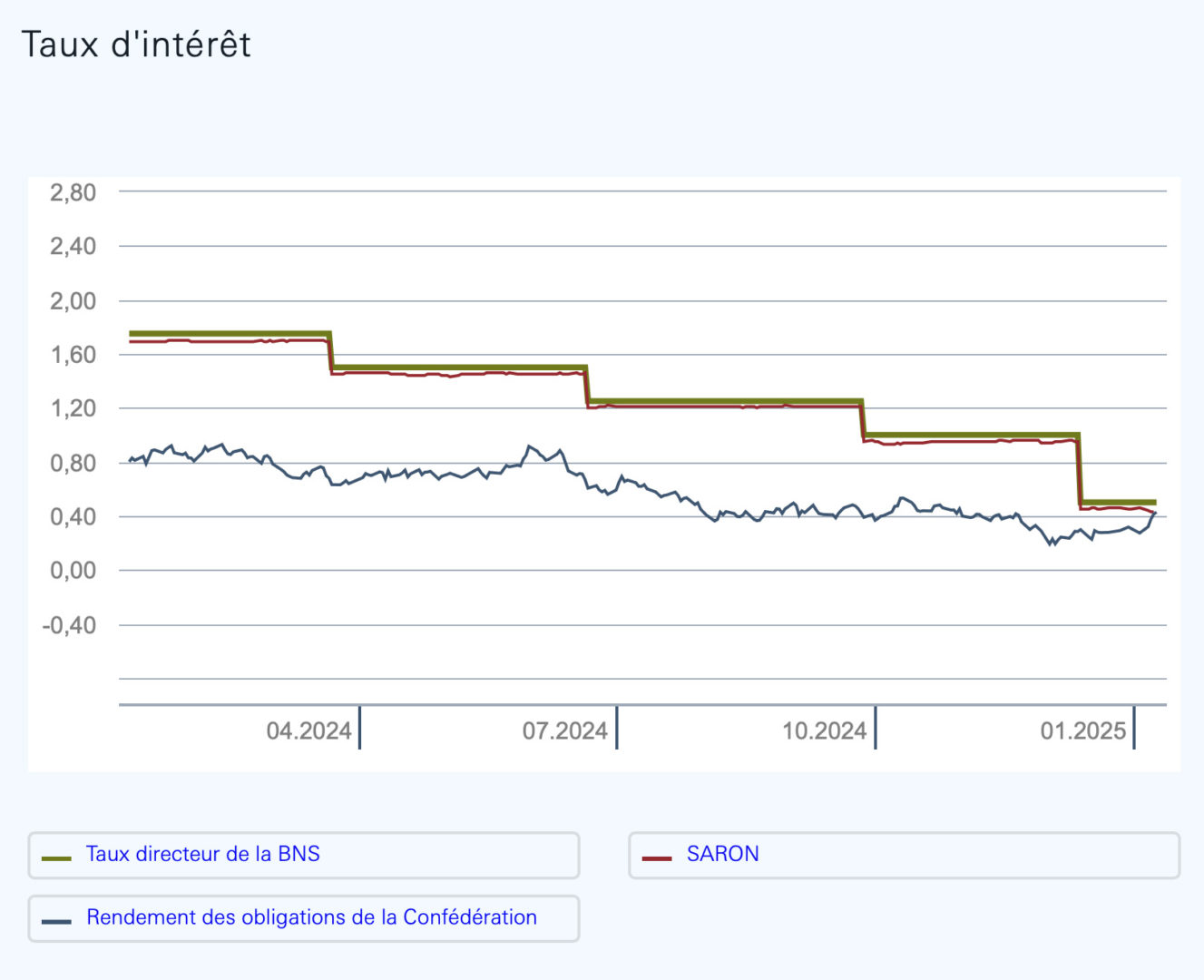
The Swiss National Bank (SNB) marked the end of 2024 with a bold decision: a fourth consecutive cut in its key rate, this time by 0.5 percentage points, to reach 0.5%.This move, more pronounced than expected, reflects a context of markedly receding inflation, with an inflation forecast for 2025 lowered to just 0.3%. This policy aims to stabilize the economy while preserving the competitiveness of the Swiss franc.
Toward a rate of 0.5% in March 2025?
According to Arthur Jurus, head of investments at Oddo BHF Switzerland, the markets anticipate a key rate of 0.75% in December 2024, followed by a further cut to 0.5% in March 2025. These adjustments will have notable repercussions, particularly on credit conditions, which will become more favorable to borrowers. Mortgage rates, already declining, should continue to fall, offering relief to potential owners.
Tenants are not left out: the reference rate for leases could fall from 1.75% to 1.50%, thereby reducing rents for many households. This dynamic reflects the direct impact of monetary decisions on everyday living conditions.
Cautious outlook for 2025
In summary, Swiss monetary policy for 2025 looks set to be a delicate balance between supporting the national economy and managing international challenges, while offering significant opportunities for borrowers and tenants. The digitalization of the real estate sector Digital tools continue to transform the buying and selling process. In 2025, immersive virtual tours, electronic contracts and online management platforms are becoming industry standards. These technologies reduce delays and increase transparency for all parties involved. Buyers can carry out real-time financial simulations, compare offers and track the progress of their transaction from a single interface. This digitalization also facilitates access to information for first-time buyers or less experienced investors. The rise of co-living and shared spaces In large cities, the high cost of housing is pushing young working people to adopt alternative solutions such as co-living. This way of life fosters community and the sharing economy, while meeting needs for flexibility and conviviality. Real estate developers are adapting their offering by creating modern spaces, equipped with attractive shared services, such as gyms, coworking spaces and shared kitchens. Young families are also exploring similar models, notably in condominiums offering shared gardens and daycare. The appeal of outlying regions With the rise of remote work, outlying regions continue to gain popularity. In Switzerland, for example, alpine areas and small municipalities close to large urban centers attract families and working people seeking quality of life. More attractive prices and efforts to improve local infrastructure reinforce this trend. Real estate projects include services such as high-speed Internet connections, efficient public transport and local amenities, thereby meeting the needs of a diverse population. Changing regulations Governments are adapting their policies to respond to current issues. In Switzerland, restrictions on second homes (through the Lex Weber) and tax incentives for sustainable projects directly influence the decisions of market players. In the European Union, similar directives emphasize green energy and the decarbonization of housing. These measures aim to steer investments toward eco-responsible projects while stimulating the economy. Outlook for investors Despite economic uncertainties, real estate remains a safe haven. Investors are diversifying their portfolios by taking an interest in promising segments such as eco-friendly housing, senior residences and co-living spaces. Income properties, particularly in dynamic urban areas, remain attractive thanks to sustained rental demand. In addition, real estate crowdfunding platforms allow individuals to invest in small-scale projects, thereby democratizing access to this sector. Conclusion The real estate market in 2025 reflects an evolution toward more sustainability, digitalization and flexibility. Whether for individuals or investors, the goal is to adapt to these new dynamics in order to take advantage of the opportunities offered by this changing context. Professionals in the sector will also need to demonstrate innovation and attentiveness to meet the varied expectations of an increasingly demanding public. The future of real estate looks promising, although marked by challenges to be met in order to combine innovation and responsibility. For any questions or requests for further information, please do not hesitate to contact us!
The digitalization of the real estate sector
The rise of co-living and shared spaces
The appeal of outlying regions
Changing regulations
Outlook for investors
Conclusion
Get a free valuation of your property or talk it through with our team, in Lausanne and on the Vaud Riviera. No obligation.

Vacancy Rates in Lausanne and the Vaud Riviera: What the Official Figures Really Hide from Investors

Investing on the Vaud Riviera: why Vevey and Montreux attract French-speaking investors

Housing crisis in Switzerland: a status report