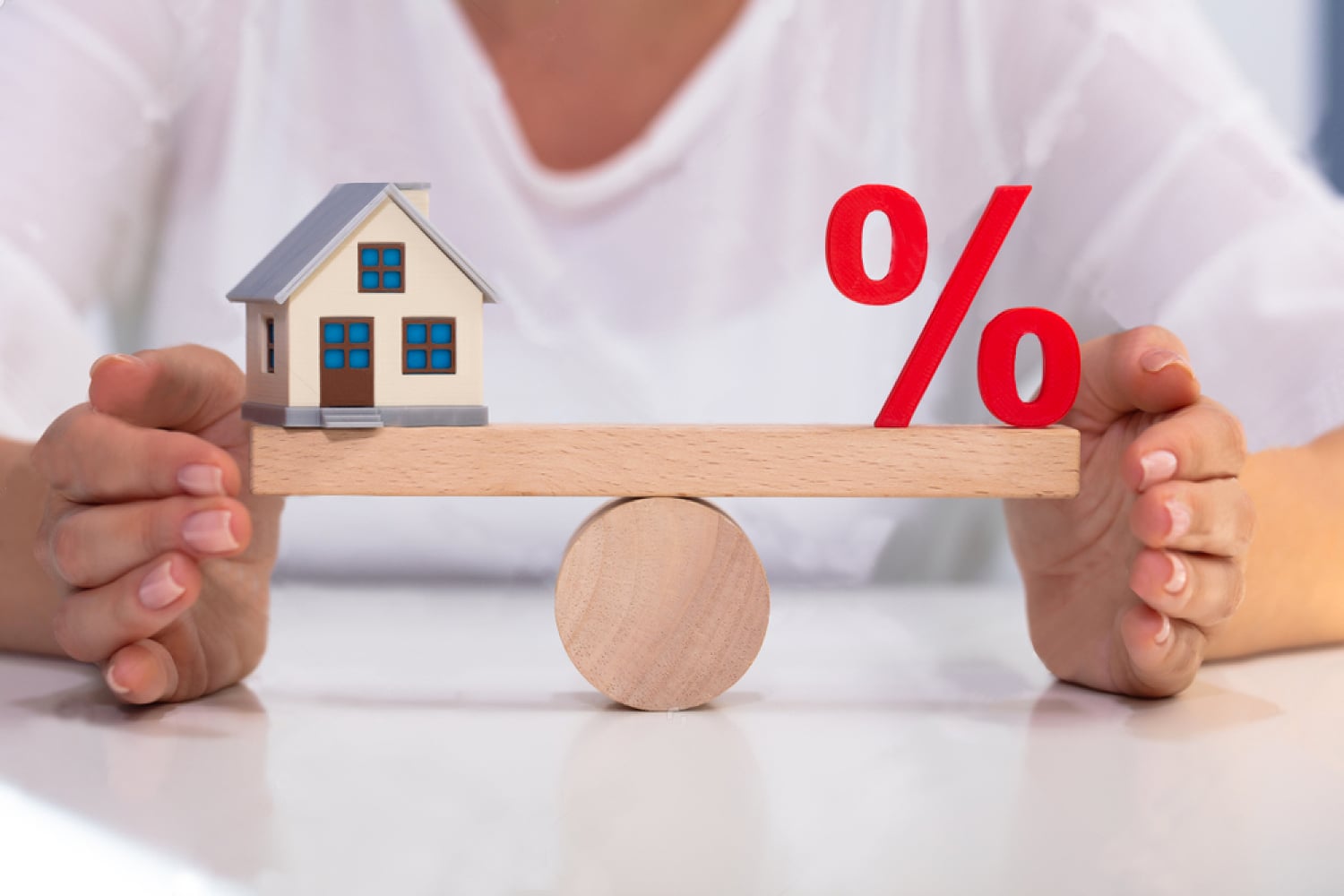
Direct or indirect amortization: which strategy to choose for your mortgage in French-speaking Switzerland?
Direct or indirect amortization in French-speaking Switzerland: tax advantages, mechanisms and advice for choosing the best mortgage strategy.
- Two repayment philosophies, one and the same objective
- Direct amortization: peace of mind at what price?
- The concrete drawbacks
Repaying your mortgage as quickly as possible, or building wealth intelligently while keeping your debt: the choice between direct and indirect amortization is one of the most defining financial decisions for a Swiss owner. Understanding the mechanisms, the tax advantages and the pitfalls of each approach can represent several tens of thousands of francs of difference over the life of a loan.

Two repayment philosophies, one and the same objective
When a bank grants a mortgage loan in Switzerland, it generally requires the debt to be brought down to two thirds of the property's value (around 65 to 67% depending on the institution) within fifteen years, or before retirement age, whichever comes first. This obligation concerns the so-called "second-rank" portion, namely the tranche between roughly 65% and 80% of the dwelling's value. For the first rank, the bank in principle leaves the choice to the owner: repay directly or indirectly.
Direct amortization consists of regularly paying a sum to the bank, mechanically reducing the remaining capital due. Indirect amortization, for its part, consists of funding a tied-pension account or policy (pillar 3a) while keeping the mortgage debt at its initial level. The bank pledges this account: it is this account that, at the agreed term, will repay all or part of the loan.
These two approaches are not simply technical variants: they reflect two distinct wealth logics, with very different impacts on taxation, liquidity and the building of wealth over the long term.
Direct amortization: peace of mind at what price?
Direct amortization appeals through its clarity. Each payment reduces the debt, the interest burden gradually decreases and the owner sees their equity grow year after year. Psychologically, it is reassuring to know that you owe your bank a little less each year.
But this seemingly virtuous mechanism has a significant tax downside. In Switzerland, mortgage interest is currently deductible from taxable income. By repaying your debt, you reduce this deduction, which mechanically increases your tax bill. Moreover, the imputed rental value, that notional income the State attributes to every owner who occupies their property, remains fully taxable regardless of the level of debt.
Beware: a major reform is on the way. On September 28, 2025, the Swiss people accepted the abolition of the imputed rental value. This reform will come into force on January 1, 2029. From that date, the imputed rental value will no longer be taxed, but in return, mortgage interest and maintenance costs will in principle no longer be deductible for owner-occupiers (except for a limited and degressive deduction for first-time buyers). This change of system profoundly alters the equation between direct and indirect amortization. The points below remain valid during the transition period, until the end of 2028.
The concrete drawbacks
- Tax deductions on interest that shrink each year
- Capital tied up in an illiquid asset
- No parallel pension build-up
- An overall tax burden that tends to increase over time
Indirect amortization: the art of repaying without repaying
Indirect amortization is based on a logic of simultaneous tax optimization and wealth building. Each year, the owner pays up to the legal limit in force into a pillar 3a account or policy (CHF 7,258 in 2025-2026 for employees affiliated to a pension fund). These payments are fully deductible from taxable income at the federal, cantonal and municipal levels, which represents an immediate, concrete tax saving, varying according to the canton of residence and the taxpayer's marginal tax rate.
Meanwhile, the mortgage debt remains constant. The deductible interest therefore remains at the same level throughout the amortization period, which maintains a stable tax advantage. At the agreed term, the capital accumulated in the pillar 3a is used to repay the tranche concerned.
The strengths of the indirect strategy
- Double tax deduction: mortgage interest and pillar 3a payments
- Active build-up of retirement savings
- Pillar 3a capital potentially invested in funds, with a return higher than the cost of the debt in a period of low rates
- Pillar 3a assets and their returns are exempt from income and wealth tax during the savings phase
A Vaud owner with a high marginal tax rate can save a significant amount each year by combining the deduction of the maintained mortgage interest with that of the pillar 3a payments. Over fifteen years, this cumulative effect often far exceeds the cost of the additional interest paid compared with a directly amortized debt.
The French-speaking Swiss context: cantonal taxation and interest rates
The relevance of indirect amortization depends largely on the canton of residence. In the canton of Vaud, income tax rates are appreciably higher than in some German-speaking cantons, which strengthens the appeal of tax deductions. An owner living in Lausanne or established on the Vaud Riviera will therefore benefit from a more pronounced tax saving than a Zug taxpayer, for example.
Furthermore, the level of mortgage rates plays a decisive role in the equation. When rates are low, maintaining a mortgage debt costs little, while the returns of an invested pillar 3a can potentially exceed this cost. When rates rise, the calculation is reassessed: the interest burden increases, which certainly enhances the value of the deduction, but also weighs more heavily on the monthly payment.
In French-speaking Switzerland, the imputed rental value is calculated according to specific cantonal rules. According to the Federal Supreme Court, it must represent at least 60% of the market rent. In the canton of Vaud, the tax authorities apply their own estimation method, and this imputed rental value can be substantial for medium- to high-value properties. It is a reminder that owning a dwelling creates a notional tax base that only a well-considered debt strategy can partly counterbalance. Note, however, that this imputed rental value will be abolished as of January 1, 2029.
How to choose: the decisive criteria
There is no universal answer. The choice between the two approaches depends on a combination of personal, tax and wealth factors that should be analyzed carefully, ideally with the support of a financial advisor or fiduciary who knows the local taxation well.
The questions to ask yourself
- What is your marginal tax rate? The higher it is, the more advantageous indirect amortization becomes. As a general rule, indirect amortization becomes worthwhile from a marginal rate of around 25%.
- Are you already funding a pillar 3a? If you are not yet funding it to the maximum, indirect amortization creates a welcome discipline of retirement savings. On the other hand, if you already contribute the maximum elsewhere, the additional tax advantage disappears.
- What is your risk tolerance? A pillar 3a in equity funds offers a higher return potential, but involves a volatility you have to accept.
- Is your professional situation stable? Indirect amortization assumes regular payments. In the event of a setback, the debt remains in full.
- Are you approaching retirement? Planning the pillar 3a withdrawal must be anticipated to limit the tax at the time of payout. Staggering the withdrawals over several accounts and several tax years makes it possible to appreciably reduce the tax burden.
- What will be the impact of the abolition of the imputed rental value in 2029? From that date, the deduction of mortgage interest will disappear for owner-occupiers. The tax advantage of indirect amortization will be considerably reduced.
The classic mistakes to avoid
- Choosing indirect amortization without regularly funding the pillar 3a: the debt stays high without any parallel savings build-up.
- Withdrawing the pillar 3a prematurely (purchase of another property, financing of works) without recalibrating the mortgage strategy.
- Forgetting to compare pillar 3a offers: returns, management fees and investment options vary greatly from one institution to another.
- Neglecting the tax planning of the withdrawal at the end of the period: opening several 3a accounts and staggering the withdrawals over several years makes it possible to reduce the tax burden.
- Adopting a strategy without reviewing it when your situation changes (marriage, divorce, birth, change of income, mortgage renewal).
- Ignoring the 2029 imputed-rental-value reform: any amortization strategy must now factor in the upcoming abolition of interest deductions for owner-occupiers.
Combining the two approaches: an often underestimated option
In certain configurations, the best strategy is neither one nor the other in its pure form, but a combination of the two. For example, directly amortizing the second-rank tranche to satisfy the bank's requirement within the required deadlines, while simultaneously building up a pillar 3a to optimize taxation and strengthen retirement provision. This mixed approach makes it possible to meet the contractual obligations while preserving the tax benefits of tied pension provision.
It is also possible, in certain cases, to use second-pillar assets (occupational pension) to finance the acquisition or the amortization. The early withdrawal of pension-fund assets follows strict rules and entails specific tax implications that must be assessed with the greatest care, particularly in connection with the reduction of future retirement benefits.
The key lies in the overall coherence of the wealth plan: mortgage, pension provision, savings and taxation form a whole. Treating mortgage amortization in isolation, without linking it to the other components of the financial situation, amounts to optimizing one piece of the puzzle without seeing the whole picture.
The advisor's role: do not decide alone
The complexity of this decision fully justifies surrounding yourself with competent professionals. An asset manager, a specialized bank advisor or a French-speaking fiduciary will be able to model both scenarios over time and precisely quantify the impact according to your situation. Real-estate agencies like Homewell, in permanent contact with owners and investors in the Lausanne region and on the Vaud Riviera, can also point you toward the right contacts and flag the points of vigilance specific to the local market.
What is certain is that this decision deserves time and serious analysis. The choice of amortization is not just a question of bank repayment: it is a major lever for building wealth, protecting retirement and optimizing taxation. In French-speaking Switzerland, where the tax pressure and real-estate prices give particular importance to every franc invested, failing to use all the available tools would be a missed opportunity. And with the abolition of the imputed rental value coming into force on January 1, 2029, it is all the more important to reassess your strategy now.
A sale project, even with tenants in place?
Our brokers support you at every step, by the book. A well-argued valuation within 48 hours.
Further reading.

- Finance
- June 4, 2026
Mortgage rates: fixed, variable or SARON, how to choose right now?

- Swiss law
- June 4, 2026
Rental deposits in Switzerland: the alternatives to a blocked deposit account that few tenants know about

- Swiss law
- June 1, 2026
Condominium charges in Switzerland: what every owner really needs to know
Get a free valuation of your property or talk it through with our team, in Lausanne and on the Vaud Riviera. No obligation.