Getting paid to be a homeowner!
Two cantonal banks granted real estate loans at negative interest rates. A case that could herald a widespread decline.
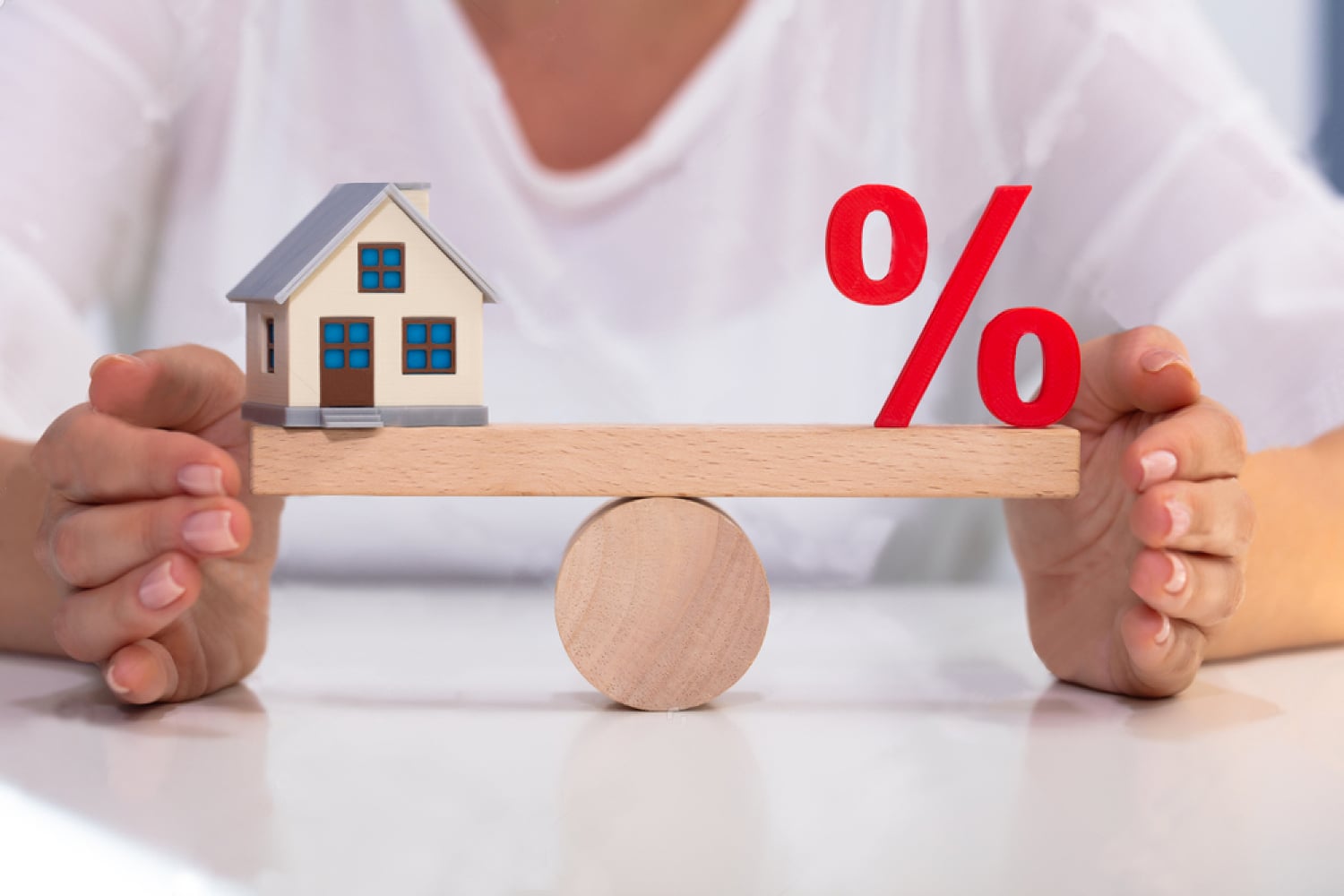
- Recently, two cantonal banks granted real estate loans at negative rates. The sector is in turmoil and could see another widespread decline. A closer look…
- Incredible but true!
- Mortgage rates as low as 0.30%
Recently, two cantonal banks granted real estate loans at negative rates. The sector is in turmoil and could see another widespread decline. A closer look…
A new era may have been born this summer. Due to weak growth and low inflation, the central banks of the main developed countries are applying very low interest rates.
Following this practice, two national financial institutions signed contracts that hinted at a promise to pay the buyer of the property. These particular cases remained anonymous and received little media coverage, but in the months, or even years, to come, this practice could become commonplace.
Incredible but true!
Obtaining a loan at a negative rate may seem unreal. However, investors who take out such products do so for several reasons:
- The lack of alternatives due to very low rates. Some financial institutions agree to lose money on their investment because the borrower will not default. To sum up, the client rents part of the bank to deposit their money there. In doing so, they buy security.
- Anticipation also matters. Investors believe that rates will continue to fall. It is therefore relevant to obtain bonds at negative rates. If the rate falls, the price of the bonds rises.
Mortgage rates as low as 0.30%
The practice is not yet widespread, but the lowering of interest rates by the American and European central banks to support the economy could increase the number of purchases finalized with a negative interest rate. Last April, the website Comparis revealed that ten-year fixed interest rates had fallen to the lowest level in their history.
However, several financial institutions have gone much lower. Key rates are falling and the floor is constantly being revised. According to the website Moneypark, credit conditions in Switzerland could improve even further for the borrower. For long-term fixed mortgages, the client could expect rates of 0.30% or 0.40%.
The Danish example
In Denmark, Jyske Bank now offers 10-year mortgages at a negative rate of 0.5% to private individuals. This is explained by the negative deposit rate applied by the central bank of Denmark. Indeed, when Danish banks place their liquidity with the central bank, the rate is -0.6%. Under these conditions, it can be worthwhile to lend to clients at rates that are admittedly negative but higher than the rate offered by the central bank.
In August, the specialized website Bloomberg wrote a striking sentence in connection with this news about Jyske Bank: “Decisions by central banks around the world to slash interest rates are upending traditional economic concepts relating to lending.” A phrase that perfectly sums up the situation of mortgages in Europe, but also around the world, where rates are likewise constantly falling.
The ideal time to buy
Even though, in Switzerland, private individuals cannot yet benefit from negative rates, neither now nor, certainly, in the short term, this is the time to buy a property. Rates are falling sharply.
Our advisors are available to shed light on your questions and offer you homes at very advantageous rates.
Homewell example
Promotion of a villa in Bex
Purchase price, CHF 890,000.-Down payment, CHF 180,000.-
Interest over 10 years at 0.8%
Monthly payment, first rank, CHF 473.-Amortization, CHF 648.-
Knowing that amortization is a kind of savings (repayment of the debt), a buyer, in October 2019, could own this property for only CHF 473.- per month.
To clarify this situation, we can take the example of buying the same property but at a different time.
- In 2008, the buyer of the magnificent villa in Bex would have obtained a rate of 4%. As a result, they would have to repay the bank monthly interest of CHF 2,367.-
- In 2018, at a rate of 1.3%, they would have to pay CHF 769.- / month to the bank.
- In 2020, at a rate of -0.5%, the bank would “pay” them CHF 267.- / month.
In short, it is possible that, in the future, a significant change in our habits relating to mortgage loans will take place. Since this shift in bank strategy is not yet really applied, current rates are a real windfall for buyers, say Nicolas Leyvraz and Romain Louia, directors of Homewell SA, with a certain enthusiasm in the face of this situation.
Get a free valuation of your property or talk it through with our team, in Lausanne and on the Vaud Riviera. No obligation.

Mortgage rates: fixed, variable or SARON, how to choose right now?
Direct or indirect amortization: which strategy to choose for your mortgage in French-speaking Switzerland?

LPPPL: the Vaud law on the rental housing stock