Rental management: what your agency really does for you day to day
Rental management in French-speaking Switzerland: discover everything your agency does day to day to protect your property and free you from the hassle.

- Tenant selection: a skill learned in the field
- What the agency systematically checks
- Inspection reports: a technical ritual with real legal consequences
Entrusting your property to a real-estate agency is much more than delegating the collection of rent. Behind every managed building lies painstaking work, often invisible but decisive, that protects your wealth and frees you from the constraints of daily life. Here is a concrete overview of what rental management really involves in French-speaking Switzerland.
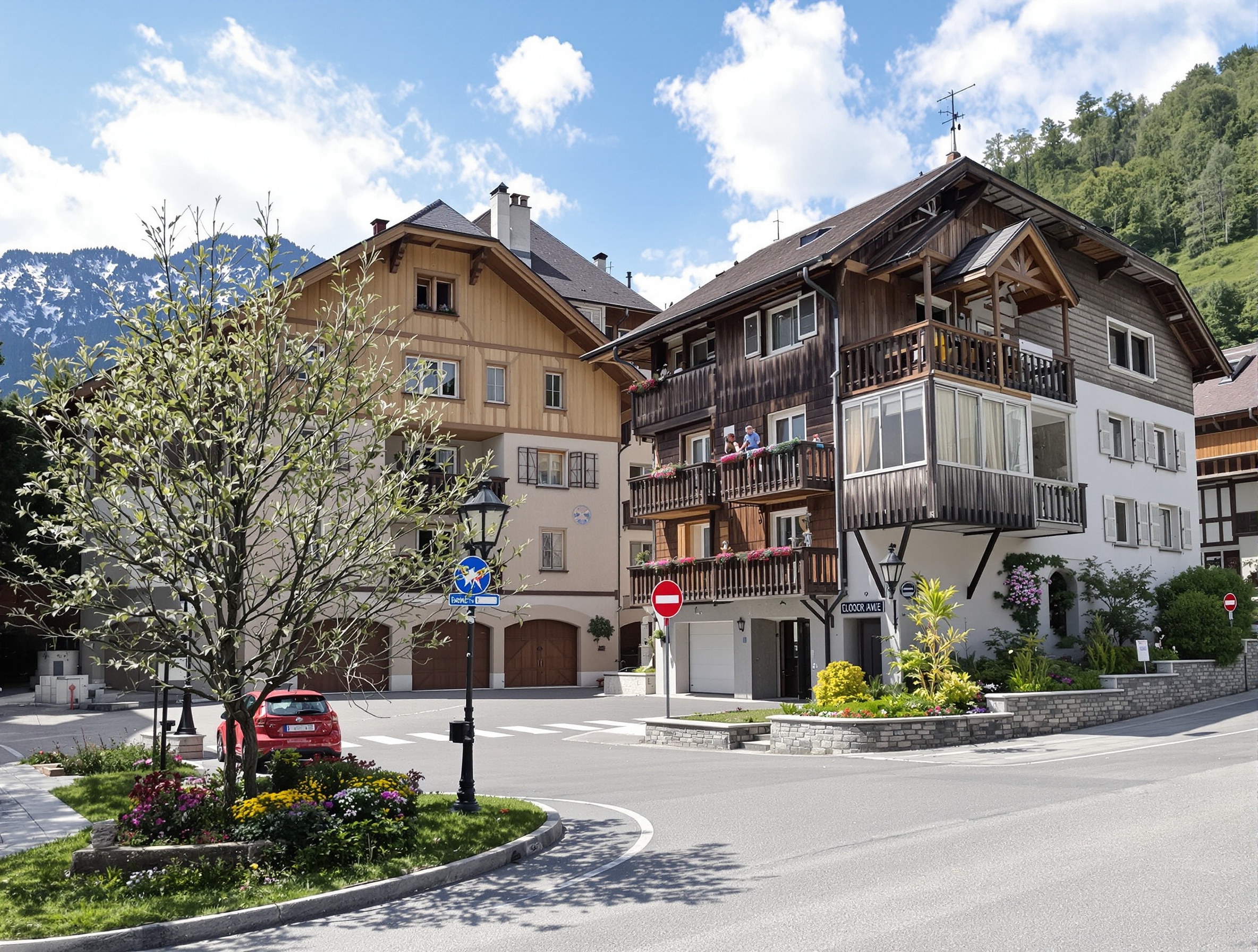
Tenant selection: a skill learned in the field
The rental relationship begins well before the handover of the keys. One of the agency's most strategic roles is to identify the right tenant, the one who will pay their rent regularly, take care of the dwelling and respect the building's rules. This selection work is far more complex than it appears, and a mistake at this stage can cost the owner dearly for years.
In concrete terms, the property manager analyzes the application files, checks the candidates' solvency with the Debt Enforcement Office, ensures that the rent-to-income ratio remains reasonable and assesses professional stability. They also cross-check the references provided and may contact former landlords. This in-depth verification step, carried out with method and experience, is one of the most worthwhile investments for an owner.
What the agency systematically checks
- Extract from the Debt Enforcement Office of the current canton of residence
- Proof of income (pay slips, employer's certificate)
- Copy of the identity document or residence permit
- References from the previous landlord
- Consistency of the profile with the surface area and the amount of the rent
Inspection reports: a technical ritual with real legal consequences
The move-in and move-out inspection report is one of the most important moments of the rental cycle. Poorly carried out, it can make any deduction from the security deposit impossible in the event of damage, even proven damage. The agency carries out this joint inventory with documented thoroughness: dated photos, meter readings, a record of every pre-existing defect, verification that the installations work.
At move-out, comparing the two reports makes it possible to identify the damage attributable to the tenant, distinguishing what amounts to normal wear and tear (the owner's responsibility) from what constitutes culpable deterioration (the tenant's responsibility). This distinction, governed by the Code of Obligations and cantonal customs, requires an expertise that only a seasoned professional truly masters.
A sloppy or incomplete inspection report can be enough to make the owner lose any possibility of recourse against a careless tenant, even in the presence of obvious damage. The agency's documentary rigor is here your first line of defense.
Technical management and maintenance: anticipating rather than reacting
A building requires continuous upkeep. Tenants' repair requests come in at all hours, concern varied equipment and require a quick response to avoid the worsening of damage. The agency has a network of qualified, available tradespeople whose rates are negotiated over time. It coordinates the interventions, checks their quality and handles the administrative follow-up.
Beyond reactive repairs, a good agency adopts a preventive stance. It plans recurring maintenance work (servicing boilers, cleaning pipes, periodic checks), anticipates the replacement of end-of-life equipment and advises the owner on the investments to make to maintain the property's value. This long-term vision distinguishes quality management from mere rent administration.
The main technical tasks day to day
- Receiving and handling tenants' repair requests
- Coordinating tradespeople and following up on interventions
- Planning mandatory periodic servicing
- Handling claims and liaising with insurers
- Advising the owner on value-enhancing works
- Monitoring the quality of the services performed

Financial and accounting management: transparency and rigor
The agency keeps rigorous rental accounts for each managed property. This includes collecting rent and charges, following up in the event of late payment, paying suppliers' invoices, managing the provisions for charges (water, heating, maintenance of common areas) and drawing up the annual statements. Every movement is tracked and the owner receives regular statements.
In the event of unpaid rent, the agency acts without delay according to a structured procedure: amicable reminder, formal notice, then, if necessary, a formal warning within the meaning of art. 257d of the Code of Obligations, opening the way to termination of the lease for non-payment. The period granted to the tenant is at least 30 days for residential leases. This swift, methodical management limits the risk of rental losses, which can quickly accumulate if action is delayed.
What a good management report contains
- A monthly statement of the collections and payments made
- An annual statement of charges with supporting documents
- A statement of current rents, any arrears and the deposits held
- A summary of works and maintenance expenses
- A regular transfer of the net balance to the owner
The legal framework and relations with tenants: navigating a very protective law
Swiss tenancy law grants significant protection to tenants. The rules governing terminations, rent increases, works or alterations are precise and strictly applied. A procedural error, a missed deadline or a forgotten official form can void a termination or invalidate a rent increase, with sometimes significant financial consequences for the owner.
The agency masters this legal framework in its smallest details. It drafts leases in compliance with the legal requirements and applicable framework contracts, notifies rent changes on the official forms approved by the canton (art. 269d CO), handles terminations within the legal deadlines and represents the owner before the conciliation authorities in the event of a dispute. In the canton of Vaud as in the other French-speaking cantons, these procedures have their local particularities that only a field professional truly knows.
It also ensures the regular updating of contracts in line with legislative and case-law developments, and advises the owner on the available room for maneuver, particularly regarding the adjustment of rent to the reference mortgage rate or to inflation.
Letting: reducing vacancy, maximizing yield
Every week of rental vacancy has a direct cost for the owner. The agency does everything possible to minimize this delay: posting the listings on the relevant platforms, organizing viewings, responding quickly to candidates, processing files diligently. A locally well-established agency, as is the case on the Lake Geneva arc and the Vaud Riviera, also benefits from a network of active candidates and can sometimes place a property without even publishing it.
It also advises the owner on the rent level to set, drawing on its detailed knowledge of the local market. Setting a rent too high needlessly lengthens the vacancy; underestimating it reduces the yield for no valid reason. Finding the right positioning requires a precise reading of current trends, neighborhood by neighborhood, property type by property type.

The frequent mistakes of owners who manage alone
Some owners choose to manage their property themselves, often to save on management fees. This decision is understandable, but it exposes them to real risks that are readily underestimated at the start. Swiss tenancy law does not forgive approximations, and the actual workload is often far greater than anticipated.
The most common pitfalls
- Using a lease that does not comply with the legal requirements or the applicable framework contracts
- Notifying a rent increase without using the official form approved by the canton, which renders it void
- Delaying action in the event of unpaid rent, letting the arrears accumulate
- Carrying out an insufficiently documented inspection report, making any recourse impossible
- Neglecting preventive maintenance, generating far more costly repairs down the line
- Setting a rent unsuited to the market, too high or too low
- Ignoring the legal termination deadlines, invalidating the notice
Faced with these risks, the fees of a professional agency are less an expense than an insurance. The peace of mind gained, the legal protection ensured and the problems avoided have a concrete value that often far exceeds the cost of the management mandate.
Choosing your agency: the criteria that really matter
Not all agencies are equal. Beyond the fees, which vary according to the services included and the size of the managed portfolio, it is the quality of communication, the responsiveness, the knowledge of the local market and the legal soundness that make the difference day to day. A well-supported owner is informed regularly, consulted on important decisions and never has to chase after their property manager.
- Favor a locally established agency that knows your neighborhood and its specifics
- Check that the property managers are accessible and respond quickly
- Ask for concrete examples of claims or disputes resolved
- Read the management mandate carefully: services included, exclusions, duration, termination
- Find out about the network of partner tradespeople and the usual response times
An independent agency like Homewell, rooted in the local fabric of Lausanne and the Vaud Riviera, brings precisely what large structures sometimes struggle to offer: a close relationship, a detailed knowledge of the market and a single point of contact who knows your property as if it were their own.
A sale project, even with tenants in place?
Our brokers support you at every step, by the book. A well-argued valuation within 48 hours.
Further reading.

- Finance
- June 4, 2026
Mortgage rates: fixed, variable or SARON, how to choose right now?

- Swiss law
- June 4, 2026
Rental deposits in Switzerland: the alternatives to a blocked deposit account that few tenants know about

- Swiss law
- June 1, 2026
Condominium charges in Switzerland: what every owner really needs to know
Get a free valuation of your property or talk it through with our team, in Lausanne and on the Vaud Riviera. No obligation.
Noise Nuisances and Landlord Liability in Lausanne: How Far Are You Required to Intervene?

Move-In and Move-Out Inspections in Lausanne: What Neither Tenants Nor Landlords Really Check

Rental deposits in Switzerland: the alternatives to a blocked deposit account that few tenants know about