Move-In and Move-Out Inspections in Lausanne: What Neither Tenants Nor Landlords Really Check
The property inspection is often rushed through in under an hour, yet it determines thousands of francs in security deposits. Here are the blind spots everyone overlooks, and how to handle them properly.

- Why a poorly conducted property inspection is a frequent source of rental disputes in French-speaking Switzerland
- The invisible or overlooked elements that are systematically missing from inspection reports
- What landlords must document to protect their property
- What tenants must insist on to get their full deposit back
- The concrete role a professional property management company plays at this key moment
In Lausanne, as elsewhere in the canton of Vaud, the property inspection is a ritual that is often treated as a simple administrative formality. Keys are handed over, rooms are glanced at diagonally, the inspection report is signed, and everyone leaves thinking the matter is settled. It is precisely this shared casualness that fuels, months later, costly disputes, unjustified deductions from security deposits, and sometimes proceedings before the Rental Tribunal.
Neither the tenant nor the landlord is truly prepared for it. The former is eager to move in or out, and the latter wants to believe everything will go smoothly. The result: blind spots pile up in the inspection report, and they always resurface at the worst possible moment. Here is an overview of the most common oversights, and the right habits to turn this moment into genuine legal protection.
The Inspection Report: A Legal Document, Not a Courtesy Form
Under Swiss tenancy law, the property inspection report is a document that forms an integral part of the lease and is signed jointly by the landlord and the tenant, with each party receiving a copy. It serves as evidence in the event of a dispute, whether before the conciliation authority or before a judge. Yet many move-in inspection reports fail to mention existing scratches on hardwood floors, the precise condition of bathroom caulking, or whether each window actually functions properly. "Good general condition" is noted where details, dates, and ideally photographs are needed.
This vagueness rarely benefits anyone. A landlord who has not documented an existing scratch on a floor will be unable to prove it was there before the tenant moved in. A tenant who did not report a faulty outlet upon arrival risks being charged for its repair at move-out. The inspection report is not a document of mutual trust: it is an objective snapshot of the property's condition at a specific point in time. It must be treated as such.
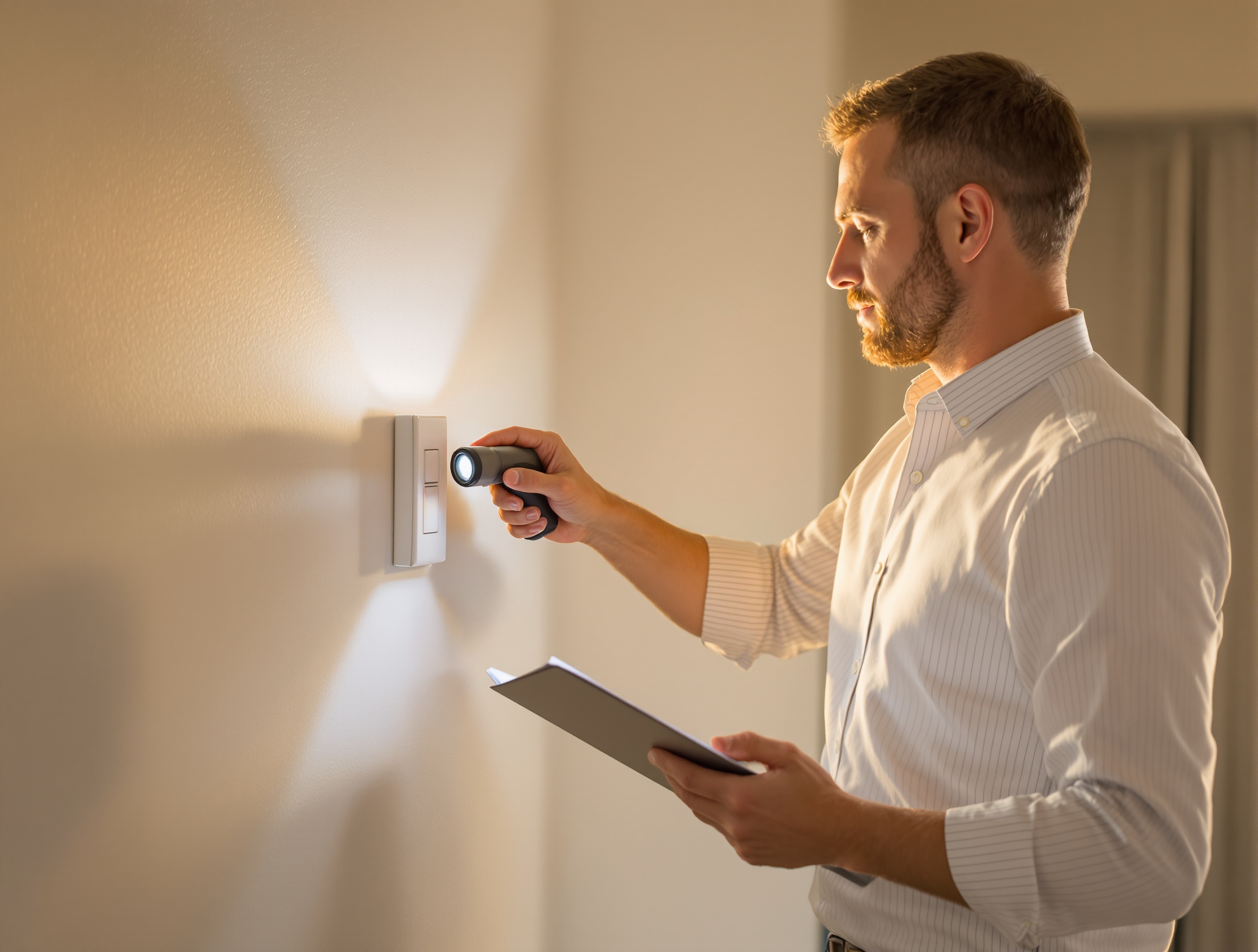
The Dead Zones That Everyone Avoids Looking At
There are places in a home that the human eye instinctively skips during a property inspection. Roller shutter housings and their mechanisms, PVC window seals, the inside of built-in closets, ventilation covers, under-sink areas, and exposed electrical wiring behind built-in stoves. These spaces exist, age, and deteriorate, yet they are almost systematically absent from inspection reports.
In older Lausanne apartments, secondary water shut-off valves, sometimes rusty or seized, are also frequently left untested, and floor drains in bathrooms and laundry rooms go unchecked. In newer units, smart home systems, connected thermostats, and video intercoms are rarely included in the inspection, even though they represent significant value and can be a source of disagreement.
Storage units and parking spaces are part of the lease, yet they are often walked through in thirty seconds. A damp storage room wall, flood marks on a concrete floor, a faulty electrical outlet in the underground garage: these are all elements that affect future repair costs and deserve to be documented with the same rigor as the living room.
Photography: Necessary But Not Enough If Done Poorly
Today, almost everyone takes photos during a property inspection. But the question is not whether you photograph, it is how. A blurry photo of a wall corner proves nothing. An image that is too wide to clearly identify a defect has little evidentiary value. Dated and geolocated photos, on the other hand, significantly strengthen the document's probative weight.
Best practice involves photographing each room systematically, from the doorway and from a corner, then taking a close-up of each defect noted in the report, recording meter readings with clear legibility, and numbering and dating the photos before attaching them as an annex to the signed document. Some professional property management companies in Lausanne now use dedicated apps that automatically date and geolocate each photo and integrate them directly into the digital report. This is a concrete advancement that reduces the risk of disputes.

What Tenants Absolutely Must Insist On at Move-In
Tenants are often in a psychologically delicate position during the move-in inspection: they want to make a good impression, they are eager to settle in, and they hesitate to seem "difficult" by pointing out imperfections. This is a mistake. Reporting a defect at move-in means protecting yourself at move-out. And if some defects escape notice during the key handover, the tenant can still report them to the landlord afterward, by registered letter and as quickly as possible, supported by photos and a postal receipt.
In practice, tenants should test every light switch, every outlet, every faucet, and every element of the built-in kitchen. They should open every window and check that the handles and locks operate without forcing. They should note the condition of the flooring beneath any furniture left by the previous occupant, and examine ceilings with raking light to detect moisture stains or fresh cracks. Anything not recorded in the inspection report becomes difficult to dispute later.
What Landlords Must Document to Protect Themselves
For landlords, the move-in inspection is also an opportunity to establish a clear and indisputable baseline. A landlord renting out a freshly renovated apartment has every reason to conduct a detailed inspection before handing over the keys, documenting the new or near-new condition of each element. Normal wear and tear will be easier to assess if the starting point is clearly established.
It is also important to record the equipment provided and its condition: the exact number of keys handed over, the condition of remote controls for blinds or garage doors, manuals for built-in appliances, and the intercom code. These details may seem trivial at move-in, but they frequently generate disputes at move-out. A precise inventory, signed by both parties, prevents many misunderstandings.
Finally, during the move-out inspection, landlords must not forget to check elements that are only visible when in operation: the boiler, the water heater, and the mechanical ventilation system. These pieces of equipment can have been mistreated without the damage being immediately visible. It should be noted that defects must be pointed out to the tenant in their presence during the inspection, or very shortly afterward; beyond that point, they can in principle no longer be charged to the tenant, except for hidden defects discovered later. For properties with complex installations, a trusted technician can be brought in for the inspection.
Wear and Tear and Restoration Costs: The Most Contentious Ground
In French-speaking Switzerland, the average lifespan of a property's components is guided by a joint reference table developed by the Fédération romande immobilière and the Swiss Tenants' Association, in effect since March 1, 2007. As a general indication, it lists a lifespan of approximately ten years for average-quality wallpaper or carpeting. This table is not legally binding, but it serves as a reference: once an element has exceeded its lifespan, its full replacement can in principle no longer be charged to the tenant. This is the principle of normal wear and tear, with the actual condition of the item remaining the determining factor.
But to apply this principle correctly, one must know when the elements were installed or replaced, because the lifespan is calculated from the date of the last work, not from the start of the lease. A landlord who cannot prove when the last paint job was done risks having their deposit deduction claim weakened, even if the walls are genuinely damaged. This is why keeping a property maintenance log, with dates and invoices for all work carried out, is a practice that professional property management companies consistently recommend.
Why Entrusting the Inspection to a Professional Property Manager Makes All the Difference
In Lausanne, many landlords still handle their property inspections informally, especially when they own only one or two apartments. This is understandable, but it is risky. A professional property management company brings three concrete advantages: the perceived neutrality that eases tensions between parties, familiarity with local standards in the Vaud rental market, and the procedural rigor that makes the document harder to challenge.
An experienced property manager can spot potential points of contention within minutes, knows the reference lifespans of materials according to French-speaking Swiss market practices, and drafts an inspection report whose wording is designed to hold up in the event of a dispute. They also know how to handle the moment on a human level, because a move-out inspection is often emotionally charged, especially when a tenant is leaving an apartment they have lived in for several years.

A property inspection is not a simple formality. It is the moment of truth in a rental relationship. Properly prepared, properly conducted, and properly documented, it is the best protection available for both the landlord and the tenant. Poorly managed, it leaves the door open to conflicts that could have been avoided with a few hours of rigor and a little method. In Lausanne, as throughout the canton of Vaud, the Rental Tribunals know this better than anyone.
Get a free valuation of your property or talk it through with our team, in Lausanne and on the Vaud Riviera. No obligation.

Noise Nuisances and Landlord Liability in Lausanne: How Far Are You Required to Intervene?

Rental deposits in Switzerland: the alternatives to a blocked deposit account that few tenants know about

House-sharing in Lausanne: profitable opportunity or headache for the owner?